Go Outdoor
Reactive Outdoor 3-Second Tent Review: Pop-Up Design and Specs


Updated · Research-based review – how we review
Disclosure: As an Amazon Associate, GoOutdoor earns from qualifying purchases. If you buy through links on this page, we may earn a small commission at no extra cost to you. Learn more.


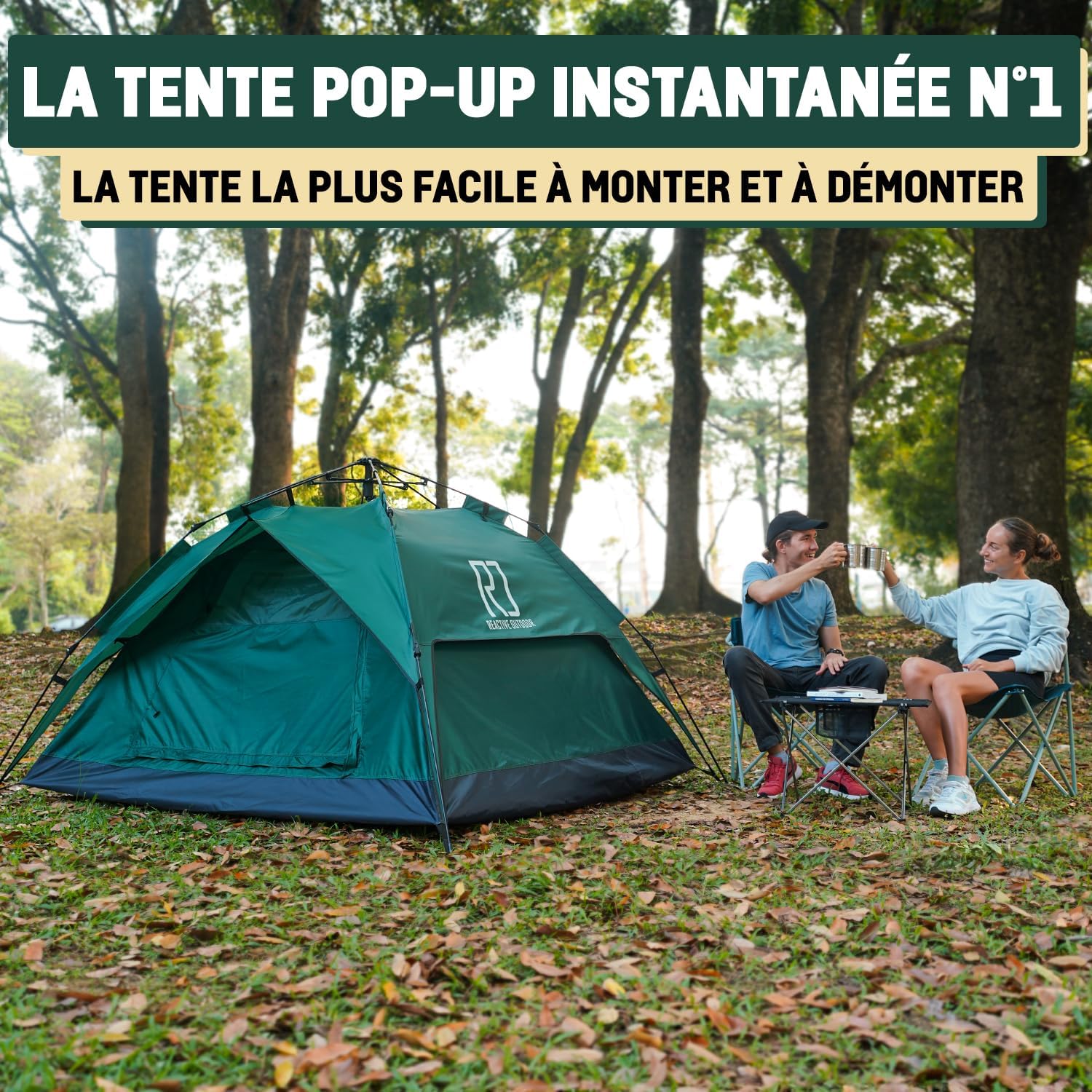
Reactive Outdoor Tent Review: Instant Pitching for Quick Weekend Shelter
Pitching a traditional shelter with multi-section fiberglass poles, sleeves, and guyline adjustments can take up valuable daylight when arriving at camp. The Reactive Outdoor 3-Second Tent relies on a pre-assembled spring-tension frame designed to erect almost instantly once unstrapped, catering to casual campers, beachgoers, and sideline spectators who want immediate weather protection without complex assembly.
Instant Pop-Up Architecture and Practical Application
Pop-up shelters bridge the gap between open sunshades and enclosed camping tents. The Reactive Outdoor 3-Second Tent combines an integrated tensioned frame with a dual-layer shell, offering a fast shelter option for daytime outings, park gatherings, festivals, and casual overnight car camping. Instead of threading individual pole sections through exterior fabric sleeves, releasing the retention band lets the frame expand directly into shape.
While technical hiking tents like the Naturehike Mongar UL prioritize minimal trail weight and packable cylindrical dimensions for backcountry rucksacks, the Reactive Outdoor pop-up is geared entirely toward rapid vehicle-supported outings where fast setup is the main requirement.
📋 Who It’s For / Who Should Skip It
Who it’s for:
- Casual car campers, parents, and beachgoers who need a rapid shaded shelter without threading frame poles.
- Park visitors and sports spectators wanting quick windbreak protection and instant sit-down coverage.
- Campers looking for a self-contained double-layer design that allows the rainfly to detach for ventilated insect protection.
Who should skip it:
- Backpackers and trekkers who require a compact cylindrical pack profile that fits inside a trail pack.
- Hikers heading into exposed alpine environments where high wind loads demand rigid, multi-stake structural poles.
- Large groups seeking standing headroom, who would be better served by a cabin setup like the MC TOMOUNT Inflatable Tent.
Key Design Elements of the Reactive Outdoor Tent
- Pre-Tensioned Spring Frame: The internal skeletal system expands automatically upon release, eliminating pole assembly and thread sleeves entirely.
- Dual-Layer Separation: Constructed with an inner breathable mesh body beneath an independent waterproof outer rainfly, reducing condensation build-up compared to single-wall shelters.
- Independent Fly Removal: The outer rainfly can be detached during dry conditions, leaving an open-air mesh dome for maximum airflow and insect defense.
- Disc-Style Carry Case: The frame coils down into a flat, circular carry bag with carry handles, designed for trunk storage and vehicle-supported travel.
- PU-Coated Weather Fabric: Sealed seams and PU-coated polyester provide basic water resistance against light showers and damp ground surfaces.
Technical Specifications Overview
| Specification | Reactive Outdoor 3-Sec Tent Details |
|---|---|
| Deployment Mechanism | Pre-tensioned flexible pop-up frame |
| Nominal Capacity | 2 – 3 Persons (ideal for 2 adults or parents with young children) |
| Wall Configuration | Double layer (ventilated inner mesh canopy plus removable rainfly) |
| Fabric Waterproof Rating | PU 2000mm+ coating with taped seams |
| Packed Form Factor | Flat disc-profile transport bag with shoulder carry straps |
Tent space planner: how many people really fit?
Person ratings usually assume sleepers lying shoulder to shoulder with no gear. Enter the floor size and the sleeping pads you actually use to see how the space works out.
Planning guide only: sloped walls reduce usable space near the edges, and pads must fit the floor's real shape. Measure your pads – sizes vary by brand.
Pop-Up Frame vs. Freestanding Backpacking Architecture
Choosing the right shelter depends on whether your priority is setup speed or packed trail efficiency. Below is an architectural comparison between the instant-pitch Reactive Outdoor shelter and a dedicated lightweight backpacking tent like the Naturehike Mongar UL.
| Feature | Reactive Outdoor 3-Sec Tent | Naturehike Mongar UL |
|---|---|---|
| Primary Setup Style | Instant self-expanding spring frame | Manual assembly with interlocking aluminum poles |
| Packed Profile | Flat circular disc (trunk storage) | Compact cylinder (backpack attachment) |
| Target Environment | Car camping, beaches, parks, sidelines | Backpacking, thru-hiking, three-season trails |
| Ventilation Layout | Removable fly over inner mesh canopy | Dual vestibules with high vents and double doors |
Practical Outing Use Cases
Park Days and Family Outings
For parents supervising young children at local parks or sports grounds, prolonged tent setup is impractical. An instant shelter provides a shaded, private space for toddlers to rest, feed, or change out of wet clothing within seconds of unbagging.
Sideline Sports and Day Festivals
Open soccer pitches and weekend tournament sidelines often provide zero shade. The pop-up footprint gives spectators reliable sun cover and a wind buffer without requiring tools or lengthy tethering processes between game intervals.
Pet Basecamp on Calm Day Trips
When introducing pets to outdoor environments, having an enclosed, ventilated perimeter keeps animals secure from insects and unexpected distractions. The integrated mesh walls permit airflow while providing an enclosed retreat on outdoor trips.
Design Strengths and Trade-Offs
✅ Strengths:
- Instantaneous physical deployment eliminates manual pole threading.
- Double-wall construction helps manage condensation better than entry-level single-layer pop-ups.
- Interior mesh protects against bugs when the rainfly is detached in warm weather.
❌ Trade-Offs:
- Large circular disc packed size is awkward for pedestrian transport and does not fit hiking backpacks.
- Flexible spring-steel frames lack the structural rigidity of thick aluminum pole structures in heavy wind gusts.
- Repacking requires learning a specific folding technique before heading out into the field.
Operational Tips for Pop-Up Tents
- Master the Folding Motion at Home: The tensioned internal steel rings require a coordinated figure-8 fold to return to the round storage pouch. Practice the motion indoors prior to your first trip to avoid bending the frame.
- Ground Anchoring is Essential: Because lightweight pop-up designs catch crosswinds easily, anchor all perimeter peg loops immediately upon expansion, even in gentle breezes.
- Protect the Floor: Placing an inexpensive ground tarp or fitted footprint under the base fabric prevents sharp twigs, stones, and coarse gravel from abrading the floor coating over time.
Ordering and Sizing Notes
When selecting a pop-up shelter, verify floor measurements against your intended sleeping gear. While rated for two to three occupants, standard car-camping comfort typically favors two adults with gear, or one adult alongside two young children. Standard double sleeping pads fit comfortably inside the perimeter.
Frequently Asked Questions
How fast does the Reactive Outdoor tent deploy?
Once the safety retention strap is disengaged, the tensioned coil frame expands fully on its own within a few seconds, requiring only staking and fly adjustment.
Can the shelter accommodate a queen air mattress?
A standard queen mattress typically occupies almost the entire interior perimeter, pushing against the side mesh. Using two single camping sleeping pads or a dedicated double sleeping pad generally yields a better fit with remaining room for daypacks.
Can the outer rainfly be taken off completely?
Yes, the rainfly is fully removable, allowing the inner tent to function as an open mesh dome for warm-weather bug protection and cross-ventilation.