Go Outdoor
Inflatable Tent with Skylight Review: Glamping Design and Field Usability

Updated · Research-based review – how we review
Disclosure: As an Amazon Associate, GoOutdoor earns from qualifying purchases. If you buy through links on this page, we may earn a small commission at no extra cost to you. Learn more.


The Inflatable Air Tent Review: Practical Skylight Architecture and Basecamp Livability
Replacing segmented metal poles with high-pressure air beams creates a freestanding cabin with generous headroom and overhead stargazing views. Here is how this 4 – 6 person inflatable glamping shelter performs in everyday campsite logistics.
Campground Logistics: Moving Past Pole Assembly
Traditional family campsite arrivals often grind to a halt during frame setup. Threading multi-piece fiberglass or steel poles through narrow fabric sleeves demands time, patience, and coordination – an unwelcome obstacle when supervising children, managing pets, or racing sunset. While instant hub shelters like the Hewolf 3 – 4 Person Instant Pop Up Tent solve rapid deployment for smaller groups, larger basecamps often require structural tradeoffs.
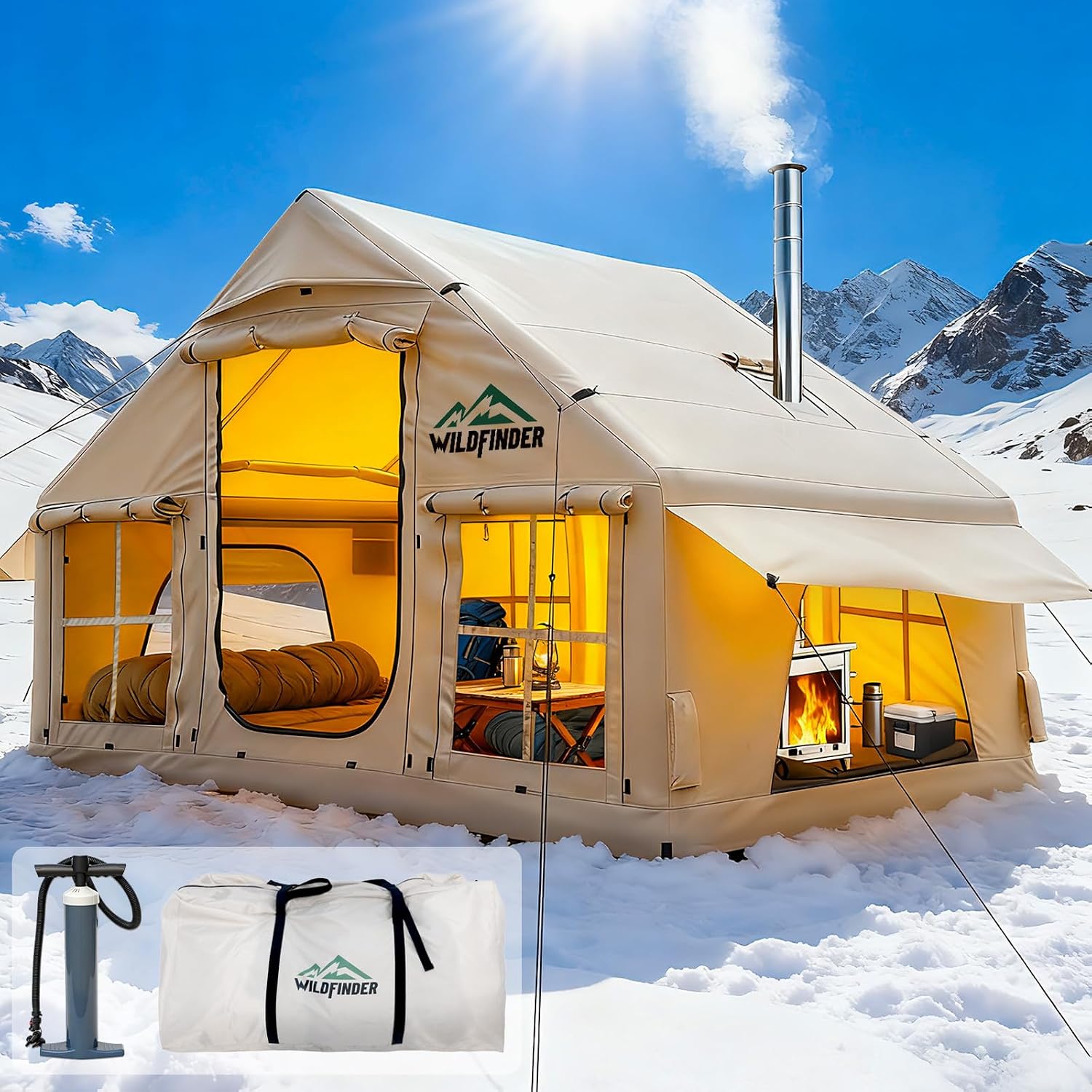
This Inflatable Tent with Skylight replaces rigid poles entirely with structural air beams. By securing the perimeter and inflating the chambers with an included manual pump, the structure rises into a full-height cabin shelter in minutes. Equipped with an integrated stove jack for cool-weather camping and a large roof window, it bridges the gap between fast setup and genuine glamping comfort. For detailed shelter comparisons and setup guides, explore the resource catalog at GoOutdoor.
Core Architecture: Structural Features and Canopy Details
- Inflatable Air Beam Skeleton: High-pressure TPU air chambers encased within heavy-duty fabric sleeves replace conventional rigid poles. The flexible beams absorb strong gusts by bowing slightly without permanently bending or snapping.
- Integrated Viewing Skylight: A wide, transparent ceiling panel delivers unobstructed overhead views for stargazing and brings substantial natural daylight into the living area during cloudy weather.
- Built-In Stove Jack Opening: A heat-resistant, flame-retardant pipe collar allows safe ventilation for a compact wood-burning camp stove during late-fall or winter outings.
- High-Density Oxford Fabric: Built from durable Oxford weave with a water-resistant polyurethane (PU) coating, the canopy resists abrasion, shields against seasonal rains, and withstands routine family and pet use.
- Vertical Cabin Geometry: Upright side walls maximize floor-to-ceiling clearance throughout the entire footprint, creating open standing room and space for camp furniture unlike low-slung dome shelters.
Product Specifications
| Feature | Details |
|---|---|
| Capacity | 4 – 6 Person (Glamping Basecamp Profile) |
| Frame Architecture | Inflatable TPU Air Beams (Manual Pump Included) |
| Canopy Material | Water-Resistant Oxford Fabric with PU Coating |
| Integrated Openings | Roof Skylight, Stove Jack Port, E-Port Cable Access |
| Packed Weight | Approx. 30 – 40 lbs (Car Camping Transport) |
Tent space planner: how many people really fit?
Person ratings usually assume sleepers lying shoulder to shoulder with no gear. Enter the floor size and the sleeping pads you actually use to see how the space works out.
Planning guide only: sloped walls reduce usable space near the edges, and pads must fit the floor's real shape. Measure your pads – sizes vary by brand.
Structural Frame Comparison: Air Beams vs. Pole Frames
Selecting the right shelter style depends on how you balance setup complexity against pack weight and interior livability.
| Metric | Inflatable Skylight Tent | Classic Cabin Frame | Instant Pre-Assembled Hub |
|---|---|---|---|
| Frame System | Pressurized Air Beams | Segmented Steel / Fiberglass Poles | Telescoping Joint Hubs |
| Pitching Method | Ground staking and manual air pump | Manual sleeve and connector assembly | Joint lock and pole extension |
| Interior Headroom | Generous vertical standing height | High vertical center clearance | Sloped dome or mid-height peak |
| Wind Behavior | Beams flex and rebound under pressure | Rigid structure; poles can bend or break | Moderate; hinge locks require solid staking |
Practical Scenarios: Who Benefits Most?
Family Outings: Pitching an air tent requires staking the base and working a manual pump for several minutes, freeing a parent from coordinating multi-pole assembly while supervising young children. For alternative cabin layouts with traditional rigid frames, compare this against the standing volume of the HIKERGARDEN 6 – 8 Person Camping Tent.
Pet Owners: The vertical side walls provide expansive interior floor area, making it easier to arrange pet bedding, playpens, or crates without pressing against slanted walls. The durable Oxford fabric stands up well to routine foot traffic and claw contact compared to thin ultralight nylon.
Four-Season and Cool-Weather Basecamps: The fire-retardant stove jack allows campers to route an exhaust chimney from a portable wood stove, providing direct heat during cold-weather outings, fall hunting basecamps, or shoulder-season sports weekends.
Field Considerations: Air Retention and Long-Term Care
While air-beam shelters remove the frustration of fractured poles, their long-term reliability depends on thoughtful handling and inflation management:
- Thermal Air Expansion: Air inside sealed beams contracts during cold nights and expands under direct midday sun. Pumping beams to moderate working pressure rather than maximum stiffness prevents seam strain during temperature swings.
- Bladder Maintenance: The inner TPU bladders are shielded by external sleeves. Routine inspections around inflation valves and keeping the included puncture patch kit stored in the transport bag ensure field readiness.
- Skylight Condensation: Solid transparent roof panels lack the micro-breathability of standard untreated woven textiles. Opening lower intake vents and peak mesh ports prevents moisture buildup from settling across the clear viewport.
Operating Guidelines for Air-Beam Shelters
- Monitor Working Pressure: Always inflate using the pressure gauge on the supplied hand pump to ensure the beams are adequately rigid without exceeding rated limits.
- Protect the Floor: Placing a ground tarp beneath the tent protects the base fabric against sharp rocks and pine needles, while an interior runner provides extra durability against boots and pet nails.
- Install a Chimney Spark Arrestor: When using a wood stove, equip the flue with a spark arrestor cap to stop hot embers from contacting the roof fabric or the clear skylight panel.
- Compare Shelter Designs: If your priority is morning shade or separate gear rooms rather than an open skylight, review our guide to the light-blocking Coleman Carlsbad Dark Room Tent.
Explore This Inflatable Glamping Shelter
This Inflatable Glamping Tent includes the manual high-output pump, ground stakes, and heavy-duty storage bag, providing an open, pole-free basecamp for your next family camping getaway.
Check for available promotional coupons and shipping terms on Amazon.
Frequently Asked Questions
How durable are inflatable tent beams against punctures?
Air-supported shelters use thick thermoplastic polyurethane (TPU) air bladders encased within reinforced Oxford fabric outer sleeves. This dual-layer construction protects the internal bladder from direct contact with sharp branches or surface friction. If an internal leak develops, the bladder can be accessed through its sleeve zipper and repaired using an adhesive TPU patch kit.
What is the takedown and packing process?
Deflation is rapid: opening the primary quick-release valves allows internal air pressure to escape immediately, collapsing the shelter to the ground. Rolling the fabric firmly toward the open valves expels remaining air, allowing the tent to fold down to its carry bag dimensions.
Can this tent handle rain and winter weather?
The pitched roofline and PU-coated Oxford fabric shed moderate rainfall, while the integrated stove jack enables safe heating with a certified portable wood stove in cold conditions. Staking guy lines securely ensures proper beam tension during seasonal winds.