
Go Outdoor
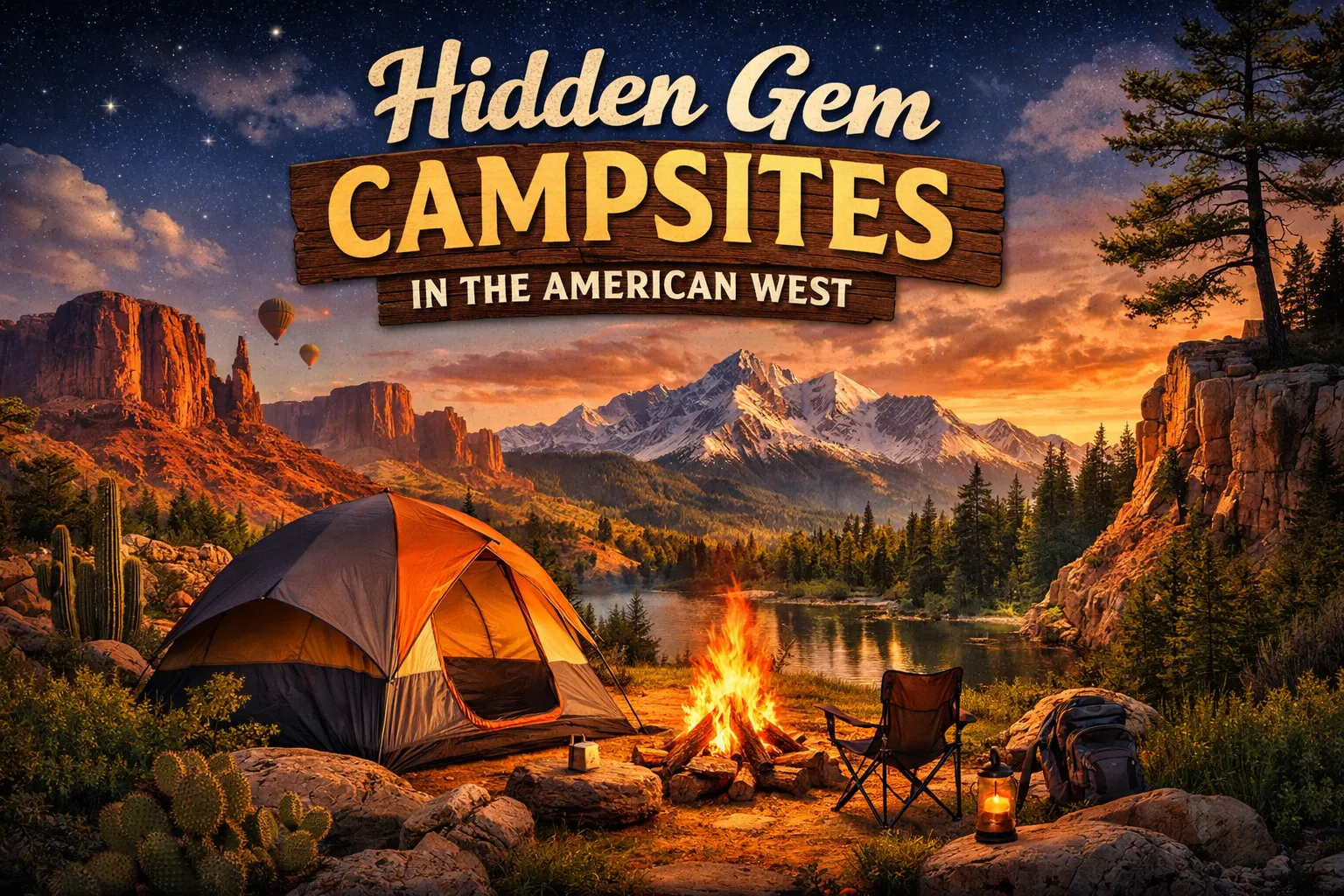
Hidden Gem Campsites in the American West You’ve Never Heard Of

Disclosure: As an Amazon Associate, GoOutdoor earns from qualifying purchases. If you buy through links on this page, we may earn a small commission at no extra cost to you. Learn more.
The American West has always carried a certain kind of magic. Endless horizons, vast deserts, alpine forests, and skies so wide they make modern life feel small. But as camping has surged in popularity, many once-quiet campgrounds have turned into crowded destinations filled months in advance.
If you’ve ever arrived at a “top-rated” campground only to find packed sites, generators humming, and headlights flashing late into the night, you already know the truth: the best camping experiences are rarely the most famous ones.
They’re hidden. Quiet. Overlooked.
What Makes a Campsite a “Hidden Gem”?
Not every quiet campsite deserves the title of a hidden gem. In this guide, a hidden gem campsite typically meets most of the following criteria:
- Low visitor traffic even during peak season
- Minimal online exposure and social media hype
- Exceptional natural surroundings
- Little to no development
- Accessible with preparation, but not effortless
Many of these places are located on BLM land, National Forests, or remote high-desert plateaus. They reward campers who are willing to plan ahead and rely on themselves.
Why the American West Is Perfect for Hidden Camping
The western United States is uniquely suited for remote camping because of one simple factor: space.
States like Utah, Arizona, Nevada, Wyoming, Oregon, and Montana contain millions of acres of public land. Much of it remains untouched and uncurated. Unlike the East Coast, where private property dominates, the West still offers true freedom for those willing to explore responsibly.
From red rock deserts to alpine lakes, the diversity of ecosystems means there is always a hidden place waiting to be found.
Camp Like You Belong There: A Responsibility Note
Hidden gem campsites remain special only because campers respect them. When visiting remote or lesser-known areas, follow these principles:
- Practice Leave No Trace
- Pack out everything you bring in
- Respect fire restrictions
- Stay on existing roads and campsites
- Avoid publicly sharing exact GPS coordinates
The goal is not to “claim” these places, but to experience them without changing them.
Essential Mindset for Remote Camping
Camping in hidden locations is about preparation, not luxury. You may not have cell service, nearby help, or amenities—but what you gain is silence, solitude, and a deeper connection to the land.
This is where reliable gear becomes crucial. When you’re miles from the nearest town, small equipment failures can become major problems.
Recommended Gear: Reliable Camping Lantern
Remote campsites are often completely dark after sunset. A dependable rechargeable lantern is essential for cooking, navigation, and safety.
👉 Lepro Rechargeable LED Camping Lantern – View on Amazon
This type of lantern provides long battery life, adjustable brightness, and eliminates the need for disposable batteries—ideal for extended trips.
Who This Guide Is For
This guide is designed for:
- Tent campers and minimalist travelers
- Van lifers and overland explorers
- Solo travelers and couples
- Hikers, photographers, and nature lovers
If you need full hookups, constant cell service, or resort-style campgrounds, these locations may not be the right fit.
What You’ll Find in This Guide
- Hidden Gem Campsites in the American Southwest
- Remote Escapes in the Pacific Northwest
- Rockies & High Desert Camping Locations
- Essential Gear for Remote Camping
- FAQs for First-Time Remote Campers
This is not a checklist. It’s a resource. Pick a region, plan carefully, and leave room for discovery.
Next up: In Part 2, we head into the American Southwest—where deserts, mesas, and canyons hide some of the most breathtaking and least crowded campsites in the country.
Hidden Gem Campsites in the American Southwest
The American Southwest is often associated with iconic destinations—Grand Canyon overlooks, Zion shuttle buses, and crowded national park campgrounds. But beyond those well-known places lies a vast landscape of mesas, slot canyons, deserts, and high plateaus where solitude is still possible.
This region rewards campers who are willing to travel a little farther, follow dirt roads, and rely on preparation rather than amenities. Below are some of the most overlooked camping areas in the Southwest—places that offer unforgettable experiences without the crowds.
1. Arizona: Remote High Desert Plateaus
Northern Arizona is far more than just the Grand Canyon. Vast stretches of high desert and forested plateaus offer dispersed camping opportunities with dramatic views and near-total silence.
Areas near the Kaibab National Forest and lesser-known BLM lands provide legal camping options where nights are dark, winds carry the scent of pine and sage, and stars feel close enough to touch.
Best time to visit: Late spring and early fall
What to expect: Wind, cold nights, minimal traffic
Access: Dirt roads—check weather conditions
Gear Consideration: Portable Power for Remote Camps
In remote Arizona locations, having a small portable power station can be useful for charging GPS devices, phones, or headlamps.
👉 Jackery Portable Power Station – View on Amazon
This type of equipment is commonly used by campers who spend multiple days off-grid.
2. Utah: Red Rock Silence Beyond the Parks
Utah’s national parks are stunning—but also extremely busy. What many visitors miss is that the surrounding BLM lands often offer equally breathtaking scenery with a fraction of the traffic.
Remote camping areas near Grand Staircase–Escalante and lesser-known canyon systems allow campers to experience red rock landscapes without tour buses or campground hosts.
Best time to visit: Spring and fall
What to expect: Hot days, cool nights, total darkness after sunset
Access: High-clearance vehicles recommended
Gear Consideration: Compact Camping Stove
Open fires are often restricted in desert environments. A compact camping stove allows for safe meal preparation while minimizing environmental impact.
👉 Coleman Portable Camping Stove – View on Amazon
Many campers prefer lightweight stoves for quick setup and easy transport.
3. New Mexico: Forgotten Forest Roads and High Elevation Meadows
New Mexico remains one of the most underrated camping states in the West. Its mix of desert, forest, and alpine terrain creates a wide range of secluded camping options.
National forests outside popular tourist corridors offer dispersed sites near streams, open meadows, and quiet mountain roads where it’s possible to camp without seeing another vehicle for days.
Best time to visit: Summer and early fall
What to expect: Afternoon storms, wildlife, cool evenings
Access: Generally accessible, but weather-dependent
Gear Consideration: Weather-Resistant Tent
High-elevation areas often experience sudden weather changes. A well-ventilated, weather-resistant tent helps manage rain and temperature shifts.
👉 ALPS Mountaineering Camping Tent – View on Amazon
This type of tent design is commonly used for multi-season camping.
4. Nevada: Vast BLM Lands and Absolute Solitude
Nevada contains more public land than almost any other state—and much of it is rarely visited. Away from major highways, campers can find legal dispersed sites with uninterrupted views of desert basins and distant mountain ranges.
This is camping at its most minimal: no services, no signs, no noise. Just wind, sky, and space.
Best time to visit: Spring and fall
What to expect: Extreme temperature shifts, total isolation
Access: Navigation skills required
Gear Consideration: Reliable LED Headlamp
In areas with no ambient light, a dependable headlamp is essential for nighttime movement and campsite tasks.
👉 Black Diamond LED Headlamp – View on Amazon
Hands-free lighting is especially useful when setting up camp after sunset.
The Southwest rewards patience and preparation. These landscapes are harsh but beautiful, and the sense of freedom they offer is unmatched. With the right mindset and equipment, these hidden gem campsites provide experiences far removed from crowded campgrounds.
Next up: In Part 3, we head north to the Pacific Northwest—where forests, coastlines, and mountain rain create an entirely different kind of hidden camping experience.
Hidden Gem Campsites in the Pacific Northwest
The Pacific Northwest offers a completely different camping experience from the deserts of the Southwest. Dense evergreen forests, misty coastlines, alpine lakes, and volcanic landscapes create an environment that feels both ancient and alive.
While popular national parks and coastal campgrounds often fill quickly, the region still holds countless lesser-known camping areas. Many are tucked away along forest service roads, deep within national forests, or near remote stretches of coastline where crowds rarely venture.
1. Oregon: Forest Roads, Alpine Lakes, and Quiet Valleys
Oregon’s vast national forests contain hundreds of miles of forest service roads that lead to secluded campsites. Away from major highways and popular trailheads, campers can find peaceful clearings near rivers, lakes, and mountain ridges.
Some of the most overlooked areas are found in lesser-known sections of the Willamette and Deschutes National Forests, where dispersed camping is permitted and visitor traffic remains low.
Best time to visit: Late spring through early fall
What to expect: Cool nights, occasional rain, dense tree cover
Access: Gravel and dirt roads; navigation recommended
Gear Consideration: Rain-Resistant Camping Shelter
Weather in the Pacific Northwest can change quickly. A tent designed with proper ventilation and rain protection is useful for forest and mountain environments.
👉 Coleman Sundome Camping Tent – View on Amazon
This style of tent is commonly used for general camping in variable weather conditions.
2. Washington: Alpine Silence Beyond the Trailheads
Washington State is known for dramatic mountain scenery, but many visitors only experience it through crowded trailheads and established campgrounds. Beyond these areas lie high-elevation forest roads and alpine basins where solitude is still possible.
National forests surrounding the Cascades offer dispersed camping options near ridgelines, alpine lakes, and quiet valleys. These sites often provide expansive views and cooler summer temperatures.
Best time to visit: Summer to early fall
What to expect: Cool nights, potential snow at elevation
Access: Seasonal roads; check local conditions
Gear Consideration: Cold-Weather Sleeping Bag
Even in summer, temperatures at higher elevations can drop significantly. A well-insulated sleeping bag helps maintain comfort overnight.
👉 TETON Sports Sleeping Bag – View on Amazon
Sleeping bags rated for cooler temperatures are commonly used in alpine environments.
3. Northern California: Forgotten Coastlines and Forest Clearings
Northern California’s rugged coastline and inland forests offer some of the most overlooked camping opportunities on the West Coast. Away from well-known beach destinations, remote coastal bluffs and forested areas provide quiet places to camp with ocean air and dramatic scenery.
Inland, national forests and BLM lands hold dispersed sites surrounded by towering trees, ferns, and flowing streams. These areas often remain uncrowded even during peak travel seasons.
Best time to visit: Late spring through fall
What to expect: Fog, moisture, mild temperatures
Access: Narrow roads; caution recommended
Gear Consideration: Rechargeable Camping Lantern
Foggy conditions and dense forest cover can make campsites very dark after sunset. A reliable lantern provides steady light for evening activities.
👉 LED Rechargeable Camping Lantern – View on Amazon
Rechargeable lanterns are often preferred for extended trips without access to power.
4. Coastal and Mountain Transitions: Managing Moisture and Terrain
The Pacific Northwest often requires campers to manage moisture, uneven terrain, and limited sunlight. Selecting campsites with natural drainage, elevated ground, and some wind exposure can improve comfort significantly.
Proper planning and equipment allow campers to enjoy the region’s quiet beauty without unnecessary discomfort.
Gear Consideration: Waterproof Hiking Footwear
Wet ground and muddy trails are common throughout the region. Waterproof footwear can help maintain comfort during campsite setup and exploration.
👉 Columbia Waterproof Hiking Boots – View on Amazon
Footwear designed for wet conditions is commonly used in forested environments.
The Pacific Northwest rewards campers who embrace its slower pace and shifting weather. With preparation and respect for the environment, these hidden gem campsites offer deep quiet, rich ecosystems, and a sense of immersion that’s difficult to find elsewhere.
Next up: In Part 4, we explore the Rocky Mountains and High Desert—where elevation, weather, and wide-open spaces create some of the most dramatic remote camping opportunities in the American West.
Hidden Gem Campsites in the Rocky Mountains & High Desert
The Rocky Mountains and surrounding high desert regions represent some of the most dramatic and least forgiving landscapes in the American West. Towering peaks, sweeping basins, alpine meadows, and wide-open plateaus create an environment where preparation matters as much as curiosity.
While national parks and popular mountain towns attract heavy visitation, vast stretches of national forest and public land remain quietly accessible to those willing to explore beyond paved roads.
1. Colorado: High-Elevation Meadows and Forest Roads
Colorado’s popularity often overshadows its hidden spaces. Outside well-known destinations, national forests offer dispersed camping near alpine meadows, aspen groves, and quiet streams.
These areas provide cooler summer temperatures, expansive views, and opportunities to camp far from developed campgrounds.
Best time to visit: Late summer to early fall
What to expect: Cold nights, afternoon storms
Access: Forest roads; seasonal closures possible
Gear Consideration: Insulated Sleeping Pad
Cold ground is a common challenge at elevation. An insulated sleeping pad can help reduce heat loss during overnight stays.
👉 Therm-a-Rest Insulated Sleeping Pad – View on Amazon
Insulated pads are commonly used for high-elevation camping.
2. Wyoming: Wide-Open Basins and Mountain Backroads
Wyoming offers an exceptional sense of space. Beyond iconic landmarks lie vast basins and forested foothills where dispersed camping is permitted and rarely crowded.
Remote campsites often provide uninterrupted views of the night sky, with minimal artificial light and a strong sense of isolation.
Best time to visit: Summer
What to expect: Wind, temperature swings
Access: Navigation skills recommended
Gear Consideration: Wind-Resistant Camping Stove
Wind is a constant factor in open basins. A stove designed to perform in breezy conditions helps ensure reliable meal preparation.
👉 MSR PocketRocket Camping Stove – View on Amazon
Compact stoves are often chosen for their portability and efficiency.
3. Montana: Forested Valleys and Quiet River Corridors
Montana’s reputation for wilderness is well-earned, yet many of its dispersed camping opportunities remain overlooked. National forests offer sites along rivers, within forested valleys, and near mountain foothills.
These locations are ideal for campers seeking privacy, wildlife viewing, and a slower pace.
Best time to visit: Summer to early fall
What to expect: Wildlife activity, cool evenings
Access: Gravel and dirt roads
Gear Consideration: Bear-Resistant Food Storage
In wildlife-rich areas, proper food storage helps reduce unwanted animal encounters.
👉 BearVault Bear-Resistant Food Container – View on Amazon
Food containers designed for wildlife areas are commonly used in mountain regions.
4. High Desert Plateaus: Space, Silence, and Exposure
The high desert regions surrounding the Rockies offer a different kind of solitude. Open terrain, sparse vegetation, and distant horizons create campsites that feel expansive and quiet.
These environments require careful planning due to exposure to wind, sun, and temperature changes.
Best time to visit: Spring and fall
What to expect: Strong sun, limited shade
Access: Easy to moderate, depending on location
Gear Consideration: Portable Shade and Sun Protection
Shade is often limited in high desert environments. Portable shelter or sun protection can improve comfort significantly.
👉 Portable Camping Sun Shelter – View on Amazon
Lightweight shelters are commonly used in open terrain.
Camping in the Rockies and high desert requires respect for elevation, weather, and distance. With thoughtful preparation, these hidden gem campsites provide unmatched scenery, solitude, and a sense of scale that defines the American West.
Next up: In Part 5, we’ll cover essential gear for hidden campsites, common questions, and final planning advice to help you camp responsibly and confidently.
Hidden Gem Campsites in the Rocky Mountains & High Desert
The Rocky Mountains and surrounding high desert regions represent some of the most dramatic and least forgiving landscapes in the American West. Towering peaks, sweeping basins, alpine meadows, and wide-open plateaus create an environment where preparation matters as much as curiosity.
While national parks and popular mountain towns attract heavy visitation, vast stretches of national forest and public land remain quietly accessible to those willing to explore beyond paved roads.
1. Colorado: High-Elevation Meadows and Forest Roads
Colorado’s popularity often overshadows its hidden spaces. Outside well-known destinations, national forests offer dispersed camping near alpine meadows, aspen groves, and quiet streams.
These areas provide cooler summer temperatures, expansive views, and opportunities to camp far from developed campgrounds.
Best time to visit: Late summer to early fall
What to expect: Cold nights, afternoon storms
Access: Forest roads; seasonal closures possible
Gear Consideration: Insulated Sleeping Pad
Cold ground is a common challenge at elevation. An insulated sleeping pad can help reduce heat loss during overnight stays.
👉 Therm-a-Rest Insulated Sleeping Pad – View on Amazon
Insulated pads are commonly used for high-elevation camping.
2. Wyoming: Wide-Open Basins and Mountain Backroads
Wyoming offers an exceptional sense of space. Beyond iconic landmarks lie vast basins and forested foothills where dispersed camping is permitted and rarely crowded.
Remote campsites often provide uninterrupted views of the night sky, with minimal artificial light and a strong sense of isolation.
Best time to visit: Summer
What to expect: Wind, temperature swings
Access: Navigation skills recommended
Gear Consideration: Wind-Resistant Camping Stove
Wind is a constant factor in open basins. A stove designed to perform in breezy conditions helps ensure reliable meal preparation.
👉 MSR PocketRocket Camping Stove – View on Amazon
Compact stoves are often chosen for their portability and efficiency.
3. Montana: Forested Valleys and Quiet River Corridors
Montana’s reputation for wilderness is well-earned, yet many of its dispersed camping opportunities remain overlooked. National forests offer sites along rivers, within forested valleys, and near mountain foothills.
These locations are ideal for campers seeking privacy, wildlife viewing, and a slower pace.
Best time to visit: Summer to early fall
What to expect: Wildlife activity, cool evenings
Access: Gravel and dirt roads
Gear Consideration: Bear-Resistant Food Storage
In wildlife-rich areas, proper food storage helps reduce unwanted animal encounters.
👉 BearVault Bear-Resistant Food Container – View on Amazon
Food containers designed for wildlife areas are commonly used in mountain regions.
4. High Desert Plateaus: Space, Silence, and Exposure
The high desert regions surrounding the Rockies offer a different kind of solitude. Open terrain, sparse vegetation, and distant horizons create campsites that feel expansive and quiet.
These environments require careful planning due to exposure to wind, sun, and temperature changes.
Best time to visit: Spring and fall
What to expect: Strong sun, limited shade
Access: Easy to moderate, depending on location
Gear Consideration: Portable Shade and Sun Protection
Shade is often limited in high desert environments. Portable shelter or sun protection can improve comfort significantly.
👉 Portable Camping Sun Shelter – View on Amazon
Lightweight shelters are commonly used in open terrain.
Camping in the Rockies and high desert requires respect for elevation, weather, and distance. With thoughtful preparation, these hidden gem campsites provide unmatched scenery, solitude, and a sense of scale that defines the American West.
Next up: In Part 5, we’ll cover essential gear for hidden campsites, common questions, and final planning advice to help you camp responsibly and confidently.
Hidden Gem Campsites in the Rocky Mountains & High Desert
The Rocky Mountains and surrounding high desert regions represent some of the most dramatic and least forgiving landscapes in the American West. Towering peaks, sweeping basins, alpine meadows, and wide-open plateaus create an environment where preparation matters as much as curiosity.
While national parks and popular mountain towns attract heavy visitation, vast stretches of national forest and public land remain quietly accessible to those willing to explore beyond paved roads.
1. Colorado: High-Elevation Meadows and Forest Roads
Colorado’s popularity often overshadows its hidden spaces. Outside well-known destinations, national forests offer dispersed camping near alpine meadows, aspen groves, and quiet streams.
These areas provide cooler summer temperatures, expansive views, and opportunities to camp far from developed campgrounds.
Best time to visit: Late summer to early fall
What to expect: Cold nights, afternoon storms
Access: Forest roads; seasonal closures possible
Gear Consideration: Insulated Sleeping Pad
Cold ground is a common challenge at elevation. An insulated sleeping pad can help reduce heat loss during overnight stays.
👉 Therm-a-Rest Insulated Sleeping Pad – View on Amazon
Insulated pads are commonly used for high-elevation camping.
2. Wyoming: Wide-Open Basins and Mountain Backroads
Wyoming offers an exceptional sense of space. Beyond iconic landmarks lie vast basins and forested foothills where dispersed camping is permitted and rarely crowded.
Remote campsites often provide uninterrupted views of the night sky, with minimal artificial light and a strong sense of isolation.
Best time to visit: Summer
What to expect: Wind, temperature swings
Access: Navigation skills recommended
Gear Consideration: Wind-Resistant Camping Stove
Wind is a constant factor in open basins. A stove designed to perform in breezy conditions helps ensure reliable meal preparation.
👉 MSR PocketRocket Camping Stove – View on Amazon
Compact stoves are often chosen for their portability and efficiency.
3. Montana: Forested Valleys and Quiet River Corridors
Montana’s reputation for wilderness is well-earned, yet many of its dispersed camping opportunities remain overlooked. National forests offer sites along rivers, within forested valleys, and near mountain foothills.
These locations are ideal for campers seeking privacy, wildlife viewing, and a slower pace.
Best time to visit: Summer to early fall
What to expect: Wildlife activity, cool evenings
Access: Gravel and dirt roads
Gear Consideration: Bear-Resistant Food Storage
In wildlife-rich areas, proper food storage helps reduce unwanted animal encounters.
👉 BearVault Bear-Resistant Food Container – View on Amazon
Food containers designed for wildlife areas are commonly used in mountain regions.
4. High Desert Plateaus: Space, Silence, and Exposure
The high desert regions surrounding the Rockies offer a different kind of solitude. Open terrain, sparse vegetation, and distant horizons create campsites that feel expansive and quiet.
These environments require careful planning due to exposure to wind, sun, and temperature changes.
Best time to visit: Spring and fall
What to expect: Strong sun, limited shade
Access: Easy to moderate, depending on location
Gear Consideration: Portable Shade and Sun Protection
Shade is often limited in high desert environments. Portable shelter or sun protection can improve comfort significantly.
👉 Portable Camping Sun Shelter – View on Amazon
Lightweight shelters are commonly used in open terrain.
Camping in the Rockies and high desert requires respect for elevation, weather, and distance. With thoughtful preparation, these hidden gem campsites provide unmatched scenery, solitude, and a sense of scale that defines the American West.
Next up: In Part 5, we’ll cover essential gear for hidden campsites, common questions, and final planning advice to help you camp responsibly and confidently.
Essential Gear for Hidden Gem Campsites
Camping in lesser-known locations requires a different approach than staying in developed campgrounds. Without nearby services, reliable equipment becomes part of your safety and comfort rather than a convenience.
The following gear categories are commonly considered by campers who spend time in remote or dispersed campsites across the American West.
Lighting and Visibility
Hidden campsites often lack any form of ambient light. Reliable lighting improves safety, navigation, and overall comfort after sunset.
Gear Consideration: Rechargeable LED Lantern
A rechargeable lantern provides steady illumination without relying on disposable batteries.
👉 Rechargeable LED Camping Lantern – View on Amazon
Lanterns of this type are often used for campsite lighting and cooking areas.
Sleep System: Staying Warm and Comfortable
Temperature swings are common in desert, mountain, and high-elevation environments. A complete sleep system helps regulate body temperature throughout the night.
Gear Consideration: Cold-Weather Sleeping Bag
Sleeping bags rated for cooler conditions are commonly used in variable climates.
Gear Consideration: Insulated Sleeping Pad
Insulated pads help reduce heat loss from cold ground.
Food Preparation in Remote Areas
Fire restrictions are common across the West. Portable cooking systems allow for safe meal preparation while minimizing environmental impact.
Gear Consideration: Compact Camping Stove
Stoves designed for outdoor use provide controlled heat and quick setup.
Power and Navigation
Navigation tools, cameras, and safety equipment often rely on power. Portable power solutions help support multi-day trips.
Gear Consideration: Portable Power Station
Portable power stations are commonly used to charge essential electronics during extended trips.
Food Storage and Wildlife Awareness
In many parts of the American West, wildlife encounters are possible. Proper food storage helps reduce risk and protect both campers and animals.
Gear Consideration: Bear-Resistant Food Container
Food containers designed for wildlife areas are commonly used in forested and mountain regions.
Frequently Asked Questions
What is a hidden gem campsite?
A hidden gem campsite is typically a legal camping area that remains less visited due to limited exposure, minimal development, or more challenging access.
Is dispersed camping legal?
Dispersed camping is permitted in many national forests and BLM lands, though rules vary by location. Always check local regulations before camping.
Do I need special equipment for remote camping?
Remote camping often requires reliable shelter, lighting, navigation tools, and food storage, as services are not nearby.
Is it safe to camp in remote locations?
With proper preparation, awareness of weather conditions, and respect for local guidelines, remote camping can be a safe and rewarding experience.
Final Thoughts: Keeping the West Wild
The hidden gem campsites of the American West offer something increasingly rare: space to slow down, listen, and reconnect with the natural world.
These places remain special because they are respected. By camping responsibly, preparing thoughtfully, and sharing experiences without overexposing locations, we help preserve the freedom and beauty that define the West.
Whether you explore a quiet desert plateau, a forested mountain road, or a misty coastal clearing, remember that the goal is not to conquer the land—but to belong to it, even briefly.
Pack carefully, travel lightly, and leave every place better than you found it.
