Go Outdoor
UZKEW Hexagon Inflatable Camping Tent Review: Airframe Architecture and Basecamp Utility

Updated · Research-based review – how we review
Disclosure: As an Amazon Associate, GoOutdoor earns from qualifying purchases. If you buy through links on this page, we may earn a small commission at no extra cost to you. Learn more.



UZKEW Hexagon Inflatable Camping Tent Review: Airframe Architecture and Basecamp Utility
Shelter analysis and technical considerations from the gear team at GoOutdoor.us
Rethinking Basecamp Setup Without Rigid Skeletal Poles
Arriving at camp late in the day often brings immediate logistical friction. Sorting through segmented fiberglass or aluminum poles, threading shock-corded rods through snagging sleeves, and anchoring flexible frame arches in gusty weather consumes daylight and patience.
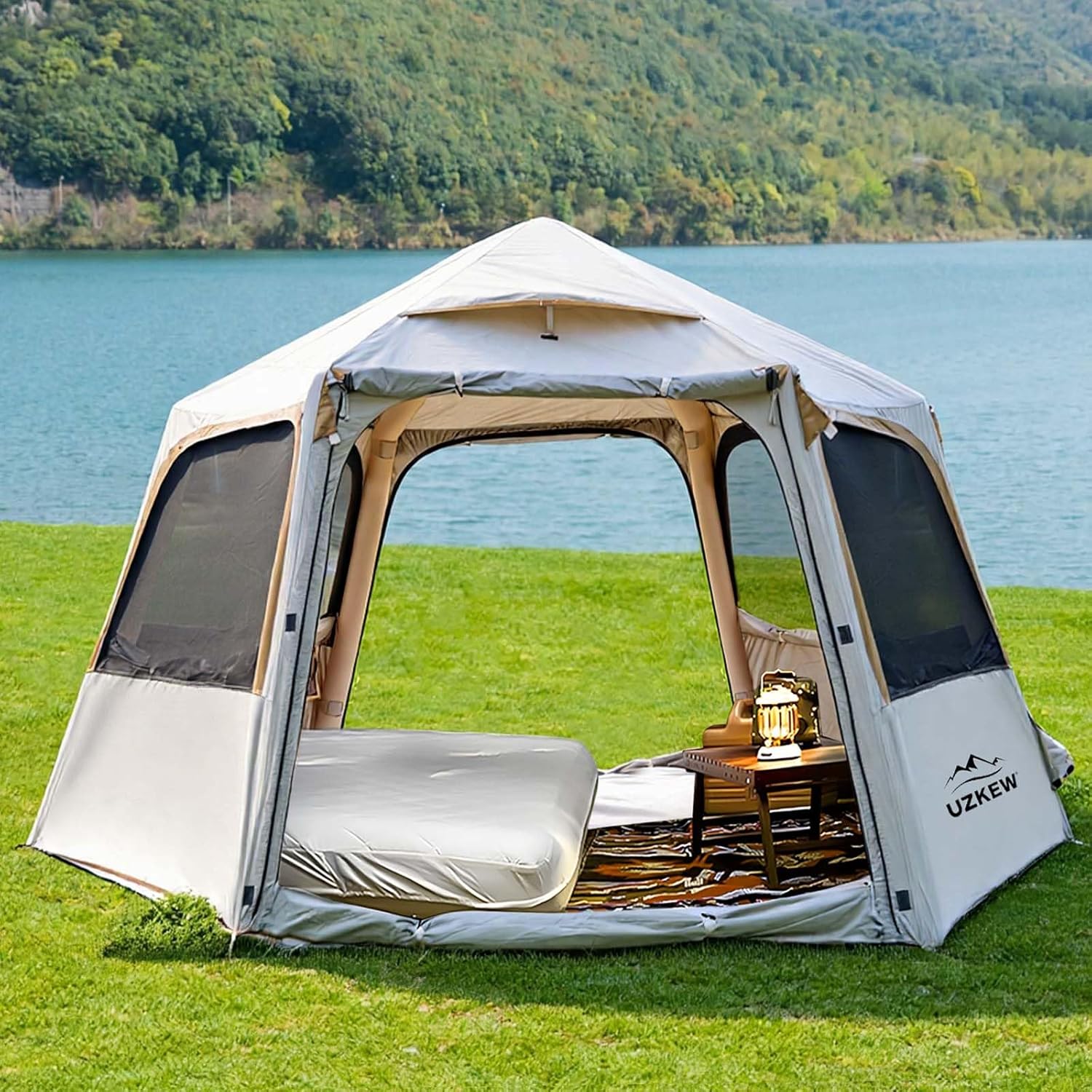
The UZKEW Hexagon Inflatable Camping Tent replaces conventional frame hardware with pressurized thermoplastic polyurethane (TPU) air columns. Built around a six-sided floor plan, this compact air shelter is designed to pitch in minutes using an included manual high-volume pump. For families managing young children, campers traveling with household pets, or outdoor enthusiasts comparing modern airbeams against traditional options like the Naturehike Village Instant Tent or larger multi-person shelters like the WENZEFZZB Inflatable Tent, understanding the structural dynamics and material limitations of inflatable shelters is essential.
Core Architectural Features of the Hexagon Airframe
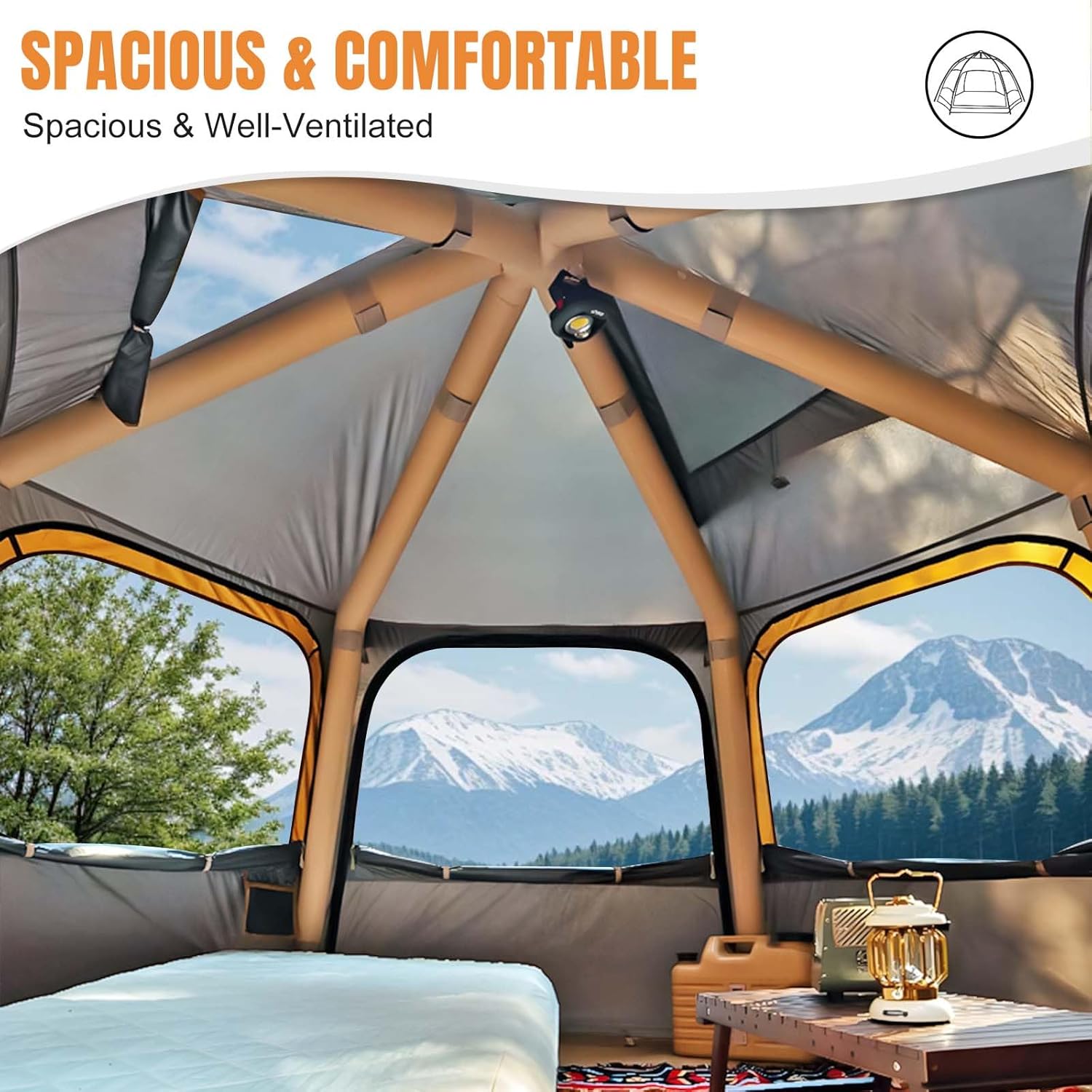
- Pole-Free Air Column Framework: Heavy-duty inflatable TPU beams provide structural rigidity without metal or fiberglass poles, eliminating bent ferrules and sleeve friction during setup.
- Hexagonal Geometry: The symmetrical six-sided shape distributes exterior wind loads evenly across the perimeter rather than presenting a wide, flat profile to oncoming gusts.
- Cross-Flow Ventilation Layout: Configured with 2 access doors and 4 high-density mesh windows, the design promotes consistent airflow across the living compartment while keeping insects out.
- PU-Coated Oxford Fabric: Durable Oxford polyester fabric treated with a polyurethane water-resistant coating provides reliable exterior rain protection and resistance against ground abrasion.
- Impact-Safe Interior Perimeter: Replacing rigid metallic framing with pressurized air beams removes hard impact points, creating a safer space for young children and camp pets.
Technical Blueprint: UZKEW Hexagon Tent
| Feature | Specifications |
|---|---|
| Capacity | 1 – 4 Person (Optimized for 2 adults or small families with gear) |
| Floor Geometry | Hexagonal multi-angle footprint |
| Ventilation & Access | 2 Entry Doors + 4 Integrated Mesh Windows |
| Inflation System | High-Volume Manual Pump (Included) |
| Weather Protection | Water-resistant coated Oxford fabric, wind-deflecting geometry |
| Canopy & Beam Material | Heavy-Duty Oxford with PU Coating; Reinforced TPU Air Columns |
Tent space planner: how many people really fit?
Person ratings usually assume sleepers lying shoulder to shoulder with no gear. Enter the floor size and the sleeping pads you actually use to see how the space works out.
Planning guide only: sloped walls reduce usable space near the edges, and pads must fit the floor's real shape. Measure your pads – sizes vary by brand.
Structural Comparison: Airframe vs. Traditional Frame Architecture
Evaluating an inflatable shelter against conventional pole-supported shelters highlights distinct mechanical trade-offs:
| Evaluation Criteria | UZKEW Hexagon Inflatable | Traditional Pole Frame |
|---|---|---|
| Pitch Mechanism | Single-operator air inflation via pump | Manual pole assembly and sleeve threading |
| Component Safety | Flexible air beams without rigid metal points | Rigid fiberglass or alloy poles under tension |
| Wind Behavior | Flexes under peak gusts and rebounds instantly | Rigid structure; risks splintered poles if overloaded |
| Field Maintenance | Requires airtight seals and patch repair readiness | Requires pole splints or cord restringing if broken |
Operational Suitability Across Camping Scenarios
Family Camping and Young Children
For parents managing children around a campsite, reducing setup complexity provides an immediate safety and stress advantage. The UZKEW tent inflates without exposed pole segments that can pinch fingers or snap under tension during pitching. The interior air columns remain soft to the touch, preventing accidental head bumps while children move around inside. Generous mesh panels provide clear sightlines so parents can monitor resting children from outside camp seating areas.
Campers Traveling with Pets
When basecamping with household pets, interior floor layout and mesh integrity are primary concerns. The hexagonal floor plan creates distinct corner pockets suitable for pet beds, travel crates, or feeding dishes out of the main central walking path. The four mesh windows provide extensive ventilation and outdoor visibility to keep pets calm, while the durable Oxford floor helps protect against light claw wear. For extended pet basecamps, pairing the shelter with a protective footprint adds an extra barrier against punctures.
Streamlined Solo and Duo Trips
Solo campers who find pitching large multi-pole cabin tents cumbersome gain substantial independence with an airframe. Because the manual pump drives air simultaneously through interconnected support chambers, one person can manage the entire pitch without needing a second set of hands to hold up ridge poles. Campers seeking even larger multi-room layouts can compare this footprint against the Inflatable 4 – 6 Person House Tent or heavy-duty canvas alternatives like the KingCamp Canvas Bell Yurt Tent.
Key Architectural Realities and Field Observations
Airbeam structures eliminate rigid skeletal failure modes: in severe gusts, pressurized TPU beams bend momentarily under wind shear and spring back into shape, rather than permanently snapping like brittle fiberglass poles.
Pressure management is a necessary discipline of airframe ownership: ambient air temperature changes cause internal pressure to rise in direct midday sun and fall on cold nights, requiring occasional top-offs or pressure release.
Best Practices for Inflatable Airframe Longevity
- Manage Beam Pressure: Do not over-pressurize the beams during initial pitch on warm mornings. Air expands as daytime temperatures peak; leaving slight structural give prevents over-stressing inflation valves.
- Deploy a Protective Ground Footprint: Even though the Oxford floor fabric features durable PU coating, placing an auxiliary tarp beneath the tent protects the airbeam contact zones from sharp rocks, thorns, and root gouges.
- Thorough Moisture Dry-Out: Never pack an inflatable tent away damp. Moisture trapped between folded fabric and TPU sleeves will degrade waterproof coatings and encourage mold growth over time.
Frequently Asked Questions (FAQ)
Q: How physically demanding is the manual air pump?
A: The included pump is a high-volume design that displaces substantial air on both the push and pull strokes. Because the internal volume of the UZKEW hexagonal beams is relatively modest compared to large 8-person multi-room cabins, inflation typically requires only a couple of minutes of steady, low-impact pumping.
Q: What happens if an air column gets punctured?
A: The tent includes a dedicated repair patch kit. In the event of an accidental leak, the TPU bladder can be accessed, cleaned, and patched similarly to an inflatable stand-up paddleboard or bicycle inner tube.
Q: How does the hexagonal profile handle heavy rain?
A: The steep canopy angles of the six-sided geometry encourage rainwater to run directly down the exterior walls without collecting on top, reducing the risk of pooling water stretching the fabric.