Go Outdoor
Heimplanet Backdoor V2 Review: Inflatable 4-Person Geodesic Tent Analysis


Updated · Research-based review – how we review
Disclosure: As an Amazon Associate, GoOutdoor earns from qualifying purchases. If you buy through links on this page, we may earn a small commission at no extra cost to you. Learn more.




Heimplanet Backdoor V2 Review: Inflatable Architecture for 4-Person Group Camping
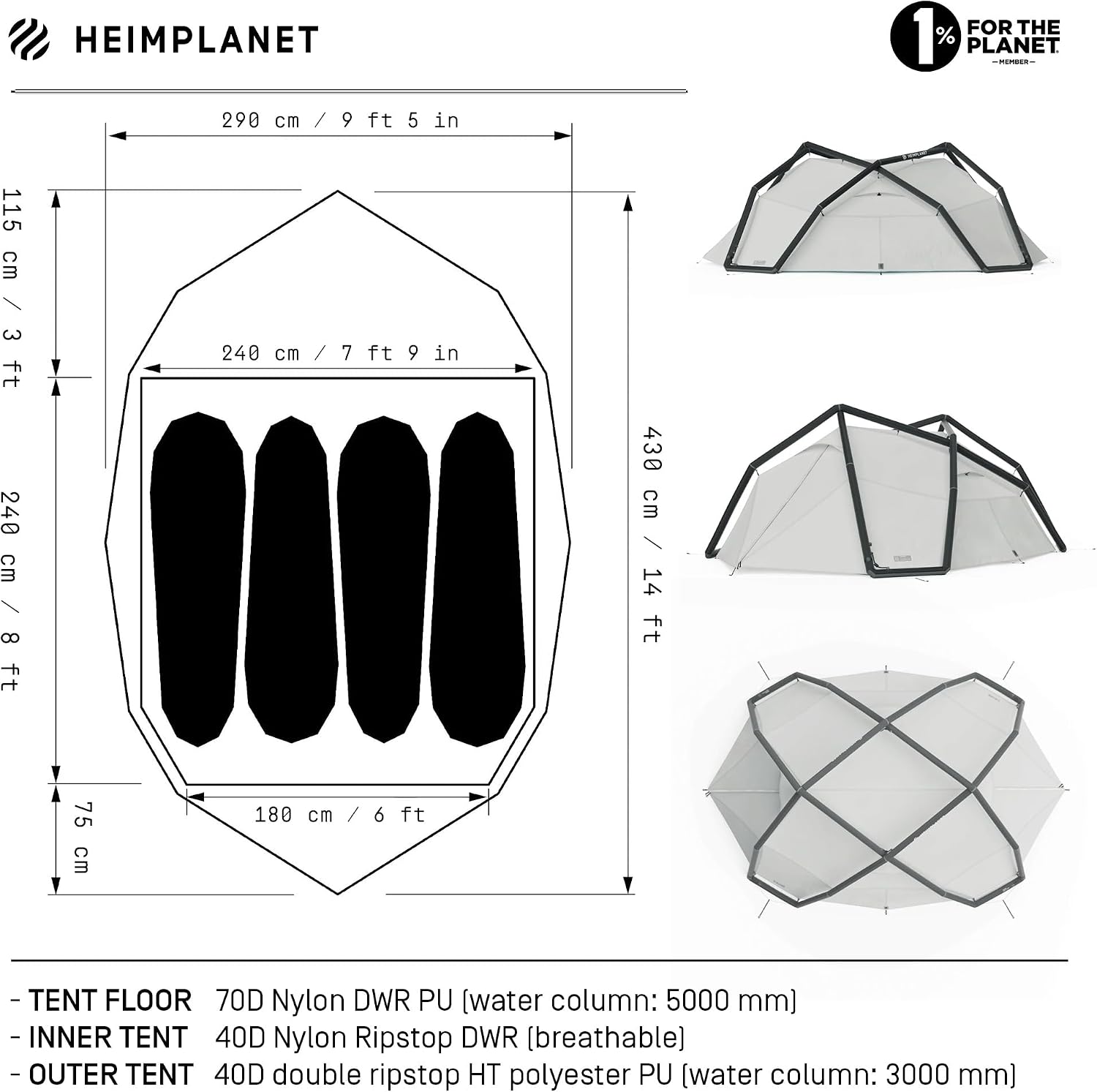
Heimplanet approaches shelter architecture from a different angle with the Heimplanet Original Backdoor V2. Instead of conventional rigid poles, the Backdoor V2 uses an external inflatable geodesic airframe. By pumping structural air beams rather than assembling metal skeletal parts, pitching is consolidated into a single inflation step. Designed to sleep up to four campers, the Backdoor V2 pairs modern technical materials with dual-entry utility for multi-camper basecamps.
For additional shelter and camp organization insights, explore our companion guides across the Go Outdoor camping gear library, including shelter ventilation options like the Odoland portable tent fan and lantern.
Key Structural Features of the Backdoor V2
- Inflatable Geodesic Airframe: A network of interconnected air beams replaces rigid metal poles, distributing structural tension across multiple triangular facets to provide stability against gusting winds without bent poles.
- Multi-Chamber Safety System: The inflatable frame can be isolated into distinct structural chambers via closing valves once inflated. If a puncture occurs in one section, the remaining air tubes remain pressurized to prevent a sudden total shelter collapse.
- Dual Access Points: The tent incorporates a primary front entrance with an extended vestibule alongside an independent rear “backdoor” vestibule, allowing sleepers to exit during the night without crawling over gear or other campers.
- High-Tenacity Weatherproofing: Built with a 5000mm hydrostatic head rating on both the flysheet and the floor, the fabric barrier is engineered to withstand heavy sustained downpours.
- Integrated Setup: The inner tent, flysheet, and airframe remain connected during storage, allowing simultaneous pitching in a single inflation sequence.
pang
Technical Specifications
| Specification | Manufacturer Rating |
|---|---|
| Sleep Capacity | 4 Persons |
| Estimated Setup Time | Under 8 minutes with manual double-action pump |
| Total Weight | Approx. 6.0 kg (13.2 lbs) |
| Hydrostatic Head Rating | 5000mm (Floor and Flysheet) |
| Frame & Fabric Materials | High-tenacity Polyester outer shell; TPU (thermoplastic polyurethane) air bladder |
Tent space planner: how many people really fit?
Person ratings usually assume sleepers lying shoulder to shoulder with no gear. Enter the floor size and the sleeping pads you actually use to see how the space works out.
Planning guide only: sloped walls reduce usable space near the edges, and pads must fit the floor's real shape. Measure your pads – sizes vary by brand.
Design Comparison: Airframe vs. Traditional Poles
Evaluating how the Backdoor V2 compares against conventional rigid-pole shelters and entry-level inflatables clarifies where its engineering advantages and trade-offs sit:
| Feature | Heimplanet Backdoor V2 | Standard 4-Person Pole Tent | Budget Inflatable Tent |
|---|---|---|---|
| Frame Architecture | Multi-chamber geodesic TPU airframe | Segmented aluminum or fiberglass poles | Single-tube or dual-arch air beams |
| Assembly Process | One-point inflation via manual or electric pump | Manual sleeve feeding and grommet pinning | Independent multi-valve inflation |
| Puncture Redundancy | Segmentable independent safety chambers | Not applicable (structural fracture risk instead) | Single-chamber failure risks structural collapse |
| Weather Resistance | 5000mm rating with wind-shedding geodesic geometry | Varies (typically 1200mm to 3000mm) | Varies (typically 1500mm to 2000mm) |
Practical Usability Considerations
Family Camping Management
When arriving at a campsite with small children, pitching shelter quickly minimizes stress. Because the inner tent and fly remain attached to the airframe, a single person can connect the pump and erect the structure in minutes. The front vestibule provides dedicated floor space for dirty footwear, keeping the sleeping quarters free from tracking mud and debris.
Camping with Pets
Campers bringing dogs or cats often worry about air-filled structures around claws. The Heimplanet airframe does not expose bare inflatable bladders; the airtight TPU inner tubes are fully enclosed inside durable, high-tenacity polyester sleeves that resist direct surface abrasion. The interior headroom and dual vestibules also provide dedicated floor space for pet beds and gear bins.
Wind Distribution and Geometry
Geodesic domes naturally distribute wind loads evenly across the entire surface rather than concentrating pressure along two or three pole crossing points. When gusting winds hit the Backdoor V2, the flexible air beams deflect slightly under extreme peak forces and rebound naturally without developing permanent structural bends or splintering joints.
Field Practicalities and Maintenance Considerations
While the inflatable airframe eliminates broken poles, operating an air-supported shelter requires familiarity with a few practical differences compared to conventional designs:
- Inflation Discipline: The airframe relies on reaching adequate internal pressure to achieve rigid stability. Under-inflation will cause sagging in wind, while extreme over-pressurization should be avoided in fluctuating high temperatures where air expands.
- Pump Dependency: You must carry a compatible high-volume manual hand pump or 12V inflator, as the tent cannot be pitched without air delivery equipment.
- Deflation and Pack-Down: Deflation is nearly instantaneous once the release valves are opened, but folding the air tubes methodically ensures the tent rolls compactly back into its carry pack.
Setup and Operational Tips
- Use a Groundsheet: Adding an optional fitted footprint preserves the 5000mm tent floor against sharp gravel, sticks, and abrasive soil.
- Follow the Recommended PSI: Check the airframe pressure indicator on your pump to inflate the beams to their intended working pressure without overfilling.
- Isolate Air Chambers After Pitching: Ensure the connecting clip valves between structural struts are closed after complete inflation so each segment functions independently as designed.
Purchasing Options and Availability
When investing in premium shelter equipment, purchasing through authorized retail channels ensures verified stock, direct fulfillment tracking, and standard consumer return protections if the layout or dimensions do not match your camping requirements.
Frequently Asked Questions
Q: How do you pack down the Heimplanet Backdoor V2?
A: Open the dedicated deflation valves located at the base of the airframe. The air exhausts quickly, allowing the fly, inner body, and frame to be rolled together as a single unit directly into the transport duffel.
Q: What happens if an air strut gets punctured?
A: The multi-chamber safety system divides the frame into separate pressure zones once the isolation valves are closed. If one tube loses pressure, the remaining inflated sections support the tent structure while the provided repair kit or patch is applied.
Q: Is the Backdoor V2 suitable for cold-weather camping?
A: The 5000mm waterproof ratings on the floor and flysheet, paired with rigid geodesic wind shedding, handle heavy rain and multi-season basecamp conditions. For sub-freezing alpine use, condensation management and snow-load monitoring remain essential.