

Go Outdoor
DJI Power 1000 V2 Review: Because “Running Out of Juice” is So 2025




The Hook: Powering Your World, One Adventure at a Time
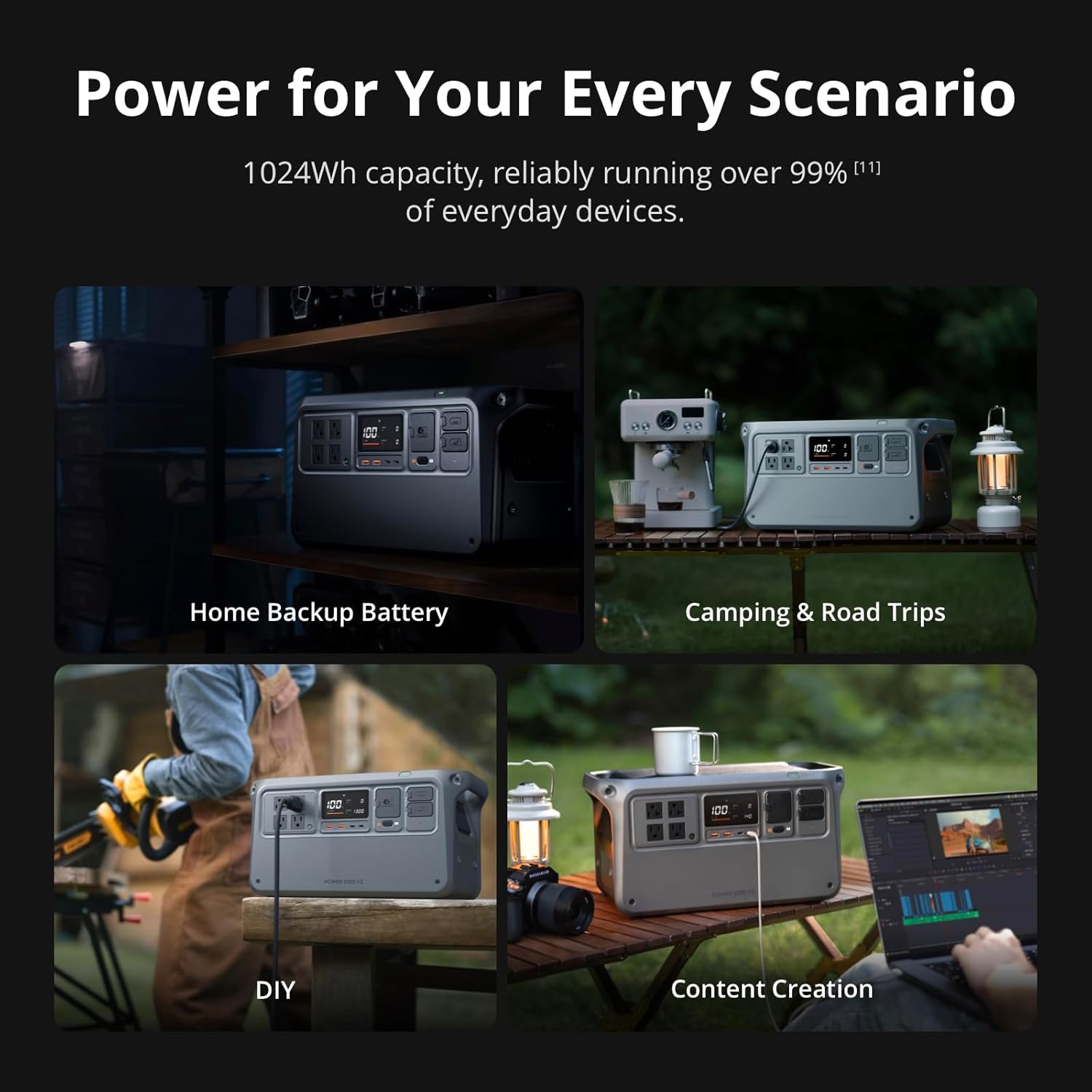
Picture this: You’re deep in the mountains on a family camping trip. The kids want their heated blanket, your sports accessories (like that fancy GPS watch and 4K action cam) are blinking red, and you’ve just realized your cat’s automated travel feeder is dead. Normally, this is where the panic sets in. But not today.
The DJI Power 1000 V2 is the literal heart of your off-grid setup. DJI, the kings of drones, decided to build a power station, and boy, did they flex. If you’re a mom with small children, imagine running a bottle warmer or a portable fridge without breaking a sweat. If you’re a tech-obsessed hiker, imagine charging your gear at lightning speed. This isn’t just a battery; it’s a 1024Wh insurance policy against boredom and cold coffee. Let’s see if it’s worth the hype.
Why the DJI Power 1000 V2 is a Game Changer
- Mind-Blowing 2600W Stable Output: Most “compact” stations struggle with hair dryers or kettles. Not this one. It handles high-power appliances like a pro, making it perfect for RVs and home backups.
- Recharge in a Blink: 0% to 80% in just 37 minutes. That’s shorter than a lunch break! You can top it off while you pack the car and be ready for the whole weekend.
- LFP (LifePO4) Battery Tech: This battery is built for the long haul—3000+ cycles. That’s roughly 10 years of daily use. It’s safe, durable, and reliable.
- Silent Operation: No one wants a buzzing generator ruining the sounds of nature. DJI kept this impressively quiet, so your cat won’t treat it like a hissing monster.
- UPS Mode: If the power goes out at home, this kicks in within 0.02 seconds. Your Wi-Fi (and your sanity) won’t even flicker.
Technical Specifications: Under the Hood
| Feature | DJI Power 1000 V2 Details |
|---|---|
| Capacity | 1024Wh |
| AC Output | 2600W (Stable) / 4400W (Peak) |
| Fast Charging | 0-80% in 37 mins (1200W input) |
| Battery Chemistry | LFP (3000 Cycles to 80%) |
| Weight | Approx. 13 kg (28.6 lbs) |
DJI Power 1000 V2 vs. Competitors
At GoOutdoor.us, we’ve reviewed everything from 1800-lumen headlamps to survival kits. How does this DJI monster stack up against other “portable” generators?
| Feature | DJI Power 1000 V2 | Standard 1kWh Stations |
|---|---|---|
| Output Power | 2600W | 1200W – 1800W |
| Charge Speed | 37 mins (to 80%) | 1.5 – 2 Hours |
| Drone Integration | Optimized for DJI Gear | None |
The Verdict: Most power stations are batteries. The DJI Power 1000 V2 is a high-performance power tool.
What the Tribe is Saying
“I use this to run my baby monitor, bottle warmer, and my breast pump during our camping trips. It’s quiet enough that it doesn’t wake the baby, which makes it worth every penny!” — Sarah, Camping Mom
“As a sports photographer, I can charge my camera batteries and laptop 10 times over. The fast-charging feature is a lifesaver when I’m on a tight schedule.” — Leo, Gear Head
Pro Tips for Your Power Station
- The ‘Cat Shield’: If your cat loves sleeping on warm things, keep the vents clear! The unit stays cool, but restricted airflow is never a good idea for high-tech electronics.
- Solar Synergy: Pair this with DJI solar panels for true off-grid freedom. It’s the ultimate “Green” setup for 2026.
- Storage: If you aren’t using it, store it at around 50-60% charge to maximize the LFP battery life.
- Lighting: Use it to power your Bud K Headlamps or 1800 Lumen Headlamps for weeks on end.
Ready to Never Be Powerless Again?
Experience the most reliable and fastest-charging power station on the market. Perfect for home, trail, and everywhere in between.
Frequently Asked Questions
Q: Can it run a coffee maker?
A: Absolutely. With 2600W of output, it handles most household coffee makers and even portable induction cooktops with ease.
Q: Is it safe to leave in a car?
A: Yes, but like any battery, try to avoid extreme heat (above 45°C) to protect the long-term health of the LFP cells.
Q: How many years will it last?
A: Thanks to the LFP chemistry, if used daily, it should last over 10 years before the capacity drops to 80%.


